Articles.
Plain answers about websites, brands and marketing for small businesses, from Jack and Carly in Somerset.
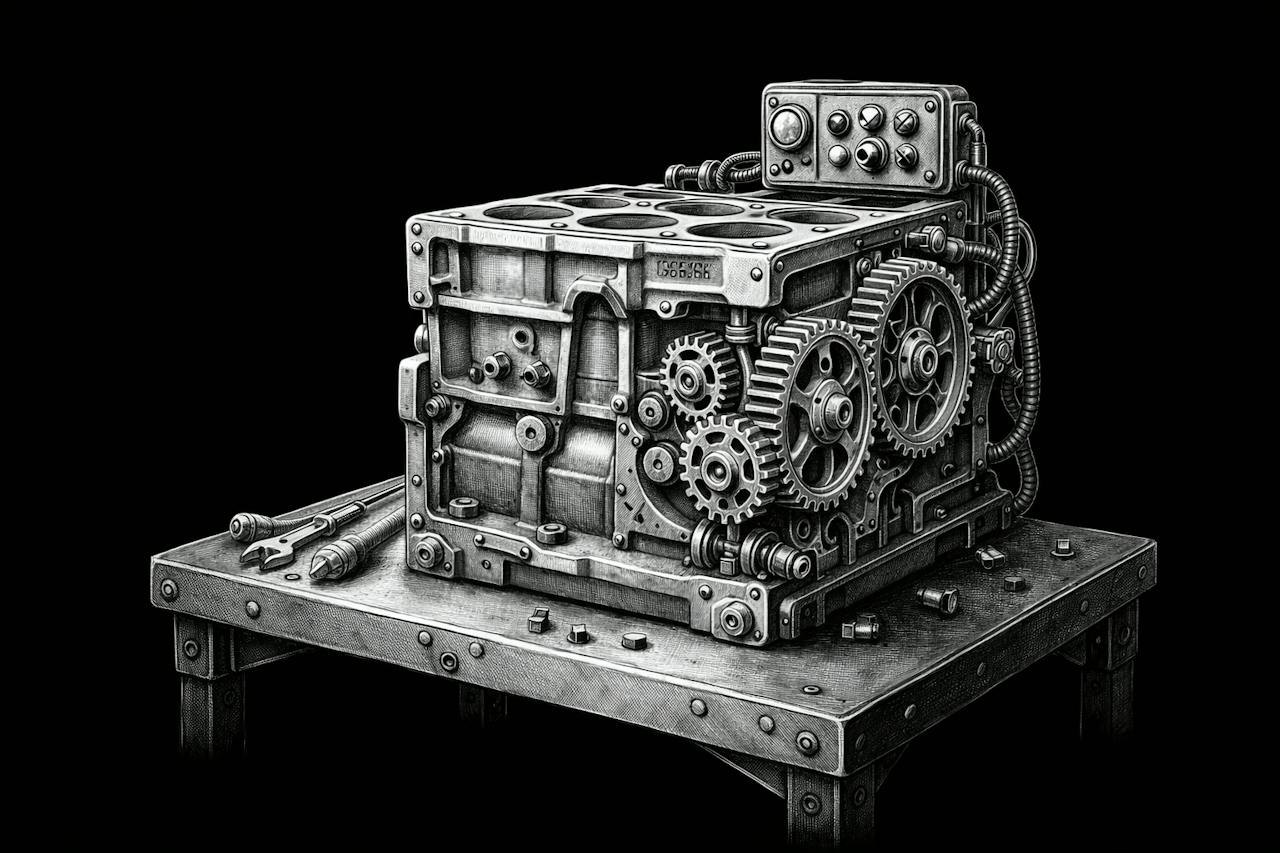
Every website needs a way for its owner to change things (words, photos, prices, news) without phoning a developer. That's what a CMS (content management system) is, and for most of the web that means WordPress. So when people hear that we build client sites on our own CMS, the fair question is: why on earth would a two-person studio in Somerset do that?
The short answer: because we got tired of maintaining other people's code, and our clients were paying the price for it. The longer answer is this post: the custom CMS vs WordPress question in full, honest trade-offs included.
The WordPress treadmill
We should say upfront that WordPress is a remarkable thing. It powers a huge share of the web, it's free, and an enormous ecosystem of plugins and themes has grown around it. We've built on it. Most agencies have.
But living with WordPress sites, year after year, means living on a treadmill:
- Plugins on top of plugins. Out of the box, WordPress is a blogging tool. Everything else (forms, SEO, galleries, caching, security, backups) arrives as a plugin, each written by a different developer, each updating on its own schedule, each a small bet that it will keep working alongside the others.
- The update drumbeat. Core updates, theme updates, plugin updates: regularly, forever. Skip them and you're exposed. Apply them and occasionally something breaks, usually on a Friday.
- Bloat. A platform built to be everything for everyone carries code your site will never use, and every plugin adds more. The result is sites that get slower as they get older.
- Security patching as a way of life. Because WordPress runs so much of the web, it's the most attacked platform on it, and most successful attacks come through plugins and themes rather than WordPress itself. Keeping a site safe isn't a one-off job; it's a subscription of attention.
None of this is a scandal. It's the natural cost of an open platform assembled from thousands of independent parts. But somebody pays that cost every month, and it's either the client, an agency's care fee, or, most often, nobody, which is how sites end up hacked or broken. We kept looking at that treadmill and asking whose interest it served. It wasn't ours, and it wasn't our clients'.
So we built our own
Somewhere along the way we did the maths: the time we spent patching, untangling plugin conflicts and working around other people's decisions would be better spent building something we actually controlled. So we wrote our own CMS: hand-built, fast, and maintained by the two people whose names are on the door.
We won't reel off a feature list, because the philosophy matters more than the spec sheet. Our CMS does what a CMS should do: it lets our clients edit their pages, images and posts easily, and it stays out of the way. Every line of it exists because one of our sites needed it. Nothing is there "just in case", which is precisely why it's quick. This is a big part of how we approach web development generally: build what the site needs, own what you build.
What this means for your website
It's fast, and it stays fast
No plugin stack, no generalised bloat, no code serving websites that aren't yours. Speed matters to visitors, to Google, and increasingly to the AI tools that now read websites on people's behalf. A lean site is easier for all of them.
No licence roulette
No annual plugin renewals, no premium theme licences, no discovering that the form tool your site depends on has been sold, abandoned or moved to a subscription. The pieces of your website don't have separate owners with separate plans.
The people who wrote the code fix the code
When something needs changing on a WordPress site, the answer is often "we'll have to wait and see what the plugin developer does". On our CMS there's no waiting and no mystery: if something's wrong, we broke it, and we fix it. That accountability is the foundation of our website care plans. We can stand behind the whole site because we built the whole site.
A smaller target
Attackers automate their work against the platforms everyone uses, probing for known WordPress and plugin vulnerabilities at enormous scale. A hand-built system isn't magically invulnerable (nothing is, and anyone who says otherwise is selling something), but it isn't on the conveyor belt of automated attacks, and there's no third-party plugin waiting to become the weak point.
The honest trade-offs
If we only gave you the upsides, this would be a brochure. There are two real arguments against an agency-built CMS, and you deserve them straight.
The ecosystem question
WordPress has tens of thousands of plugins; we don't. If your project genuinely needs a sprawling third-party ecosystem, WordPress may serve you better, and we'll say so when it's true. In practice, most small business websites need a dependable core (pages, posts, forms, galleries, integrations with the tools they already use), and building those properly beats bolting them on. But the point stands: an off-the-shelf platform offers more ready-made parts.
The portability question
The sharper worry: "If my site runs on your CMS, am I stuck with you?" It's the right question to ask anyone in our position, and here's how we answer it:
- You own your content, full stop. Your words, images, domain and data are yours, and our terms say so in writing.
- Open export. Your content can be exported in standard, machine-readable formats at any time. If you leave, you take everything with you: no ransom, no sulking.
- No contracts designed to trap you. We'd rather keep clients by being good than by being difficult to leave.
Lock-in is a business model, not a technical necessity. Any agency running its own platform should be willing to put ownership and export terms in writing. If they won't, that tells you what you need to know.
Custom CMS vs WordPress: how to decide
If you're weighing this up for your own website, ignore the tribal arguments and ask three questions of whoever you're considering:
- Who maintains this, and what does that cost over five years? WordPress maintenance is real, ongoing work, priced in or not.
- What happens when something breaks? You want a named human who's accountable, not a support forum.
- What do I own, and what can I take with me? Get it in writing, whichever platform you choose.
Good answers exist on both sides. WordPress with a diligent agency behind it is a fine choice. A custom CMS with a committed team behind it is, we'd argue, a better one, but the team matters more than the technology, and either can be done badly.
Common questions
What is a custom CMS?
A custom CMS is a content management system built by an agency or developer rather than taken off the shelf like WordPress. It does the same fundamental job (letting you edit pages, images and posts without touching code), but it's written specifically for the sites it powers, so it carries none of the generalised weight of a platform built to serve every website on earth.
Is a custom CMS better than WordPress?
It depends on who's behind it. A well-built custom CMS is typically faster, simpler to use and less exposed to the plugin vulnerabilities that make WordPress a constant maintenance job. WordPress is better if you need its enormous plugin ecosystem or want any developer anywhere to be able to work on your site. The deciding factor is the team maintaining it, whichever way you go.
Am I locked in if my website runs on an agency's own CMS?
You shouldn't be, and it's the right question to ask. Insist on two things in writing: that you own your content and domain outright, and that your content can be exported in a standard, machine-readable format if you ever leave. We offer both as standard. If an agency won't put that in writing, walk away. Lock-in is a business model, not a technical necessity.
Can I edit my own website on a custom CMS?
Yes. Editing your own content is the entire point of any CMS, custom or not. In practice a purpose-built editor is often easier than WordPress, because it only shows you the things your site actually uses rather than a dashboard designed for every possible website.
What happens to my website if something breaks on a custom CMS?
The people who wrote the code fix the code. There's no waiting for a plugin developer on another continent to release a patch, and no ambiguity about whose fault it is. That accountability is one of the main reasons agencies build their own systems. Ask how support works and what response times to expect before you sign with anyone.
Talk to the people who wrote the code
We're Jack and Carly of Bare Creative, a husband-and-wife studio in Somerset. We build fast, hand-crafted websites on our own CMS, we put ownership and export terms in writing, and we're still here after launch. If you're weighing a custom CMS against WordPress for your next site, we'll give you an honest read on your situation, even if the honest read is "stay where you are". Get in touch. We answer our own emails, too.
Add a comment:
Your
move
Tell us what you are building and we will tell you, honestly, whether we are the right people for it. A call, an email, or a message. Whichever you prefer.